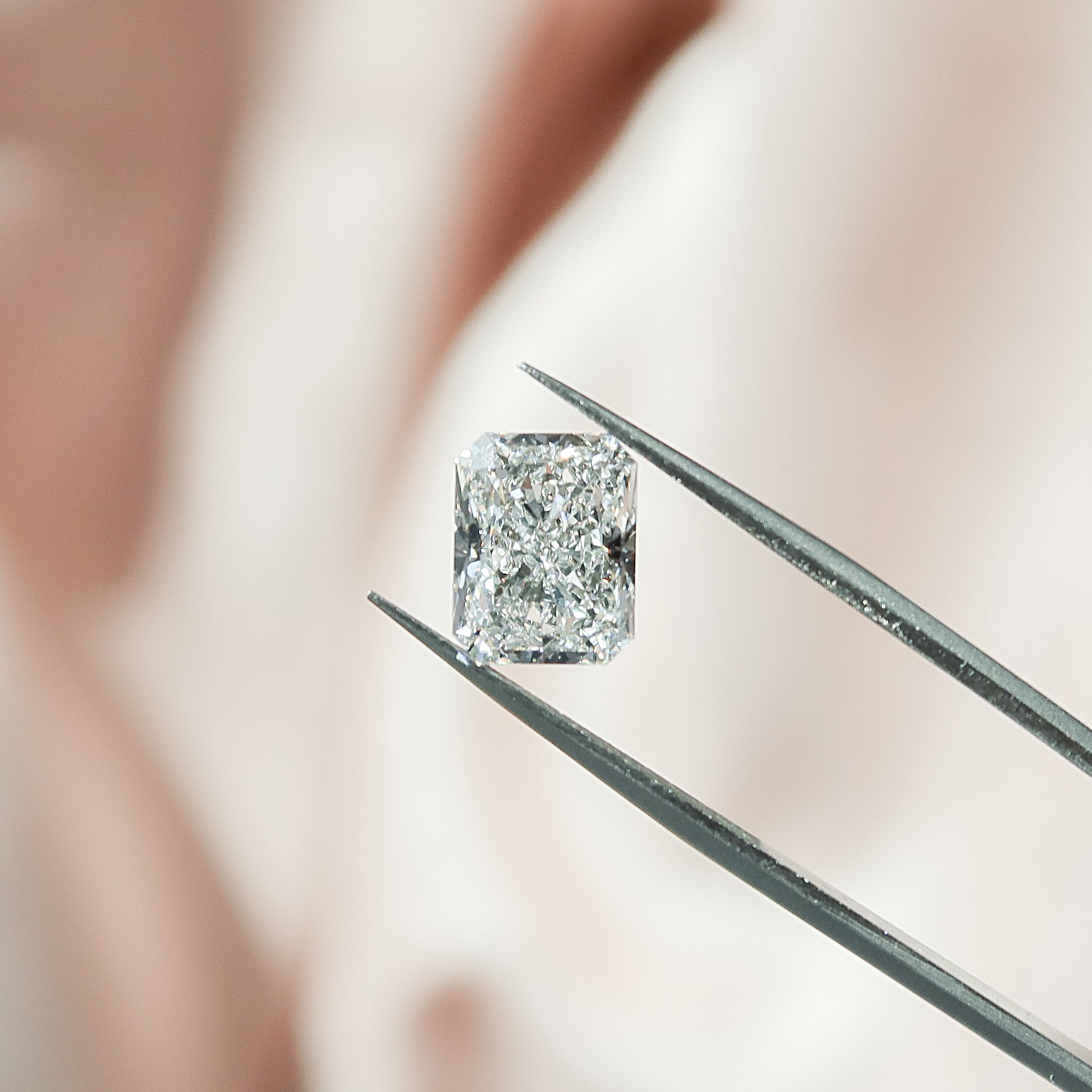
Everything You Need to Know About Radiant Cut Diamonds
The Ashley with a 3.5 carat Radiant cut Diamond and The Skyler with a 4 carat Radiant cut Diamond in Yellow Gold
Quick Summary
Radiant cut diamonds combine the faceting of round diamonds with a square or rectangular outline and trimmed corners. Their 70-facet pattern creates strong light return, while the shape suits both modern and classic settings. When choosing one, pay attention to length-to-width ratio for shape preference, check for even light distribution with no dark areas, and select VS clarity or higher for an eye-clean look. Because they can show more color than round diamonds, aim for G–H or better. Radiant cuts have a vivid presence and can appear larger than some shapes, making them a practical and striking choice.
Radiant cut diamonds have been growing in popularity among engagement ring shoppers. This crisp and stylish shape takes the fiery light performance of a round brilliant and merges it with the rectangular shape of an emerald cut, producing a stone that catches light beautifully while maintaining the elongated, elegant profile so many buyers love.
Before choosing one, it helps to understand what makes this shape so compelling. This guide covers the features that define the radiant cut, how to evaluate a stone's quality, which settings complement it best, and what to keep in mind before you buy.
The Pave Nelly with a 4.5 carat Radiant cut Diamond and in Yellow Gold
What Is a Radiant Cut Diamond?
The radiant cut diamond was invented in 1977 by master cutter Henry Grossbard. It’s usually rectangular and features trimmed corners, which soften its appearance while helping protect it from chipping. But what truly sets this cut apart is its 70-facet pattern, which creates a bright and lively sparkle.
Radiant cuts are popular with those who want a distinctive shape without giving up brilliance. Unlike step-cut diamonds, which produce a more subtle, mirror-like effect, radiant cuts deliver strong fire and light performance in different settings. This combination makes them an appealing choice for buyers who want both visual impact and everyday versatility.
A radiant cut diamond is a strong choice for those who want a balance of beauty, resilience, and a distinctive outline. Here are some of the reasons why it’s both eye-catching and well-suited for everyday wear:
Exceptional Sparkle:Radiant cuts are known for their intense brilliance, making them one of the most sparkling fancy-shaped diamonds available. Their facet pattern reflects light in multiple directions, creating a bright and lively appearance.
Effective at Hiding Inclusions:The faceting helps mask small inclusions, so imperfections are less visible to the naked eye. This allows buyers to choose slightly lower clarity grades without sacrificing overall appearance.
The Pave Kamellie with a 1.5 carat Radiant cut Diamond in White Gold and The Kamellie with a 2 carat Radiant cut Diamond in Yellow Gold
Versatile Design Appeal:Radiant cuts work well in both modern and vintage-inspired settings. Their balanced shape allows them to complement a wide range of engagement ring styles.
Distinctive Yet Balanced Look:This cut has a unique shape while maintaining a clean and symmetrical appearance. It stands out without feeling overly unconventional, giving it universal appeal.
Overall, a radiant cut diamond creates a stunning interplay of light and shape, making it a luxurious choice for those who want a piece that truly stands out.
The Emma with a 2 carat Radiant cut Diamond in Yellow Gold
How to Choose a Radiant Cut Diamond
Choosing a radiant cut diamond goes beyond picking a size or setting. Because this cut doesn’t have the same standardized grading system as round diamonds, you’ll want to evaluate several visual and technical factors to make sure you’re selecting a stone that looks bright, balanced, and clean.
Length-to-Width Ratio:The ratio determines whether the diamond appears square or rectangular. A ratio of 1.15 to 1.35 produces the classic elongated look that has made the radiant cut so distinctive.
Cut Quality and Light Performance:Since there is no universal grading standard for this shape, a close inspection is key. Look for even light return across the stone, avoid dark patches or dull areas, and choose a diamond with Very Good or Excellent symmetry for a more balanced appearance.
Clarity Selection:The faceting pattern helps conceal many small inclusions, making radiant cuts more forgiving than some other shapes. A VS clarity grade or higher is typically enough for an eye-clean appearance, though it is still important to check that any inclusions are not noticeable to the naked eye.
Color Considerations:Radiant cuts tend to show slightly more color than round diamonds. For a bright, near-colorless appearance, it is best to choose a color grade of G to H or higher.
Carat Weight:When choosing a radiant cut diamond, consider how size, proportions, and light performance work together rather than relying on carat weight alone, as these variables can affect how large it appears. Avoid overly deep stones that may look smaller, and balance carat weight with color and clarity to ensure a bright, appealing result.
These guidelines make it easier to choose a stone with a bright, attractive appearance and balanced proportions. When these qualities work well together, the diamond will be beautiful in a wide range of settings.
The Mia with a 3 carat Radiant cut Diamond and The Kamellie with a 3.5 carat Radiant cut Diamond in Yellow Gold
Best Settings for Radiant Cut Diamonds
The right engagement setting can enhance the look of a radiant cut diamond while complementing its shape and light performance. Each of the top options below presents a different style and vibe, allowing you to match the ring to your personal taste and lifestyle.
Solitaire:A solitaire setting offers a clean and timeless look that keeps all attention on the diamond. With no surrounding stones, it allows the radiant cut’s shape and light performance to stand out on its own.
Bezel Setting:A bezel setting encircles the diamond with a smooth metal border that follows the shape of the stone. This is especially suited to radiant cuts because it protects the trimmed corners while emphasizing the clean, modern outline.
The Parker with a 2 carat Radiant cut Diamond in Yellow Gold
Three-Stone Setting:A three-stone setting creates a balanced look that complements the radiant cut’s structured shape. Side stones, such as baguettes or pears, can highlight the center diamond’s geometry or add contrast for a more dynamic appearance.
Halo:A halo setting surrounds the center stone with smaller diamonds, enhancing the radiant cut’s natural sparkle. It also softens the outline of the cut corners while making the center stone appear larger and more prominent.
Choosing the right setting comes down to style preference and how the ring will be worn day to day. Each option enhances the radiant cut in its own way, from understated simplicity to bold presence.
The Liv with a 2.5 carat Radiant cut Diamond and The Ashley with a 2 carat Radiant cut Diamond in Yellow Gold
Radiant Cut Diamond Pros and Cons
Every diamond shape involves trade-offs, and understanding them upfront leads to a more confident purchase. The radiant cut is no exception. The table below summarizes its most notable advantages and the factors that warrant closer consideration before buying.
Pros
Cons
Highlight return, creating a bright and lively appearance
No official cut grading system, so quality must be judged visually
Trimmed corners help reduce the risk of chipping
Can show more color than round diamonds
Often offers good value compared to round diamonds of similar quality
Less traditional in appearance than round diamonds
Faceting helps conceal small inclusions
FAQS
How Does a Radiant Cut Compare to Similar Shapes?
The radiant cut is often compared to the elongated cushion cut and the emerald cut, since all three share a longer outline. The key difference is in the faceting. Emerald cuts are step-cut stones that produce a sophisticated, mirror-like effect, while elongated cushion cuts tend to have a softer, more romantic appearance. The radiant cut sits between them: it has the sharp, trimmed corners of the emerald cut but the brilliant faceting and intense light return more commonly associated with round and cushion diamonds.
The Penelope with a 2 carat Radiant cut Diamond and The Kamellie with a 2.5 carat Emerald cut Diamond in Yellow Gold
How Much Does a Radiant Cut Diamond Cost?
Radiant cuts are generally priced lower than round diamonds of comparable carat weight, color, and clarity, making them an appealing option for buyers who want a larger or higher-quality stone within a set budget. Prices vary widely depending on the four Cs, but as a rule, the radiant cut's price advantage is one of its most practical selling points.
How Do I Care for a Radiant Cut Diamond?
The radiant cut's 70-facet pattern means there are more surfaces to attract oils, dust, and residue from everyday wear, all of which can dull its light return over time. Regular cleaning with warm water, mild soap, and a soft brush keeps those facets clear and performing at their best. Because the cut relies so heavily on light interaction for its brilliance, even a thin film of buildup can noticeably affect how the stone looks. A quick clean every few weeks makes a visible difference.
The Eleanor with a 2.5 carat Radiant cut Diamond, The Pave Kamellie with a 3.5 carat Radiant cut Diamond and The Lucia with a 2.5 carat Radiant cut Diamond in Yellow Gold
Final Thoughts
Radiant cut diamonds offer a compelling blend of light performance, shape, and versatility, making them a standout choice for engagement rings. With their crisp outline, strong sparkle, and ability to suit a wide range of settings, they appeal to buyers who want something eye-catching yet refined.